

Ecommerce marketing digital refers to the use of online channels, data, and technology to promote products, attract customers, and drive sales for e-commerce businesses. In the US and UK, digital marketing is the backbone of successful ecommerce brands, enabling businesses to compete globally while targeting customers with precision and measurable results.
This guide explains what ecommerce digital marketing is, how it works, the key channels involved, effective strategies, common challenges, and how businesses use digital marketing to scale sustainably.
What Is Ecommerce Digital Marketing
Ecommerce digital marketing is the practice of promoting online stores and products through digital channels to generate traffic, conversions, and repeat purchases. Unlike traditional retail marketing, ecommerce marketing relies heavily on data, automation, and performance tracking.
It focuses on the entire customer journey, from first awareness to post-purchase retention, using online touchpoints such as search engines, social media, email, and paid advertising.
Why Digital Marketing Is Essential for Ecommerce
In ecommerce, customers cannot physically interact with products. Digital marketing fills this gap by building trust, providing information, and guiding purchasing decisions.
Key Reasons Ecommerce Depends on Digital Marketing
-
Customers research extensively before buying
-
Competition is global, not local
-
Buying decisions are data-driven
-
Performance can be measured in real time
In mature markets like the US and UK, ecommerce brands that fail to invest in digital marketing struggle to gain visibility and trust.
Core Channels in Ecommerce Digital Marketing
Successful ecommerce marketing relies on a mix of channels working together.
Search Marketing for Ecommerce
Search marketing captures customers who already show buying intent.
Key Elements
-
Product and category visibility
-
Informational content that supports decisions
-
Search advertising for competitive keywords
Search plays a major role in driving high-quality traffic to ecommerce websites.
Social Media Marketing for Ecommerce
Social media supports brand awareness, engagement, and discovery.
Ecommerce Uses of Social Media
-
Product promotion and launches
-
Community building
-
Influencer and creator collaboration
-
Customer support and engagement
Social platforms often influence buying decisions even when purchases happen later.
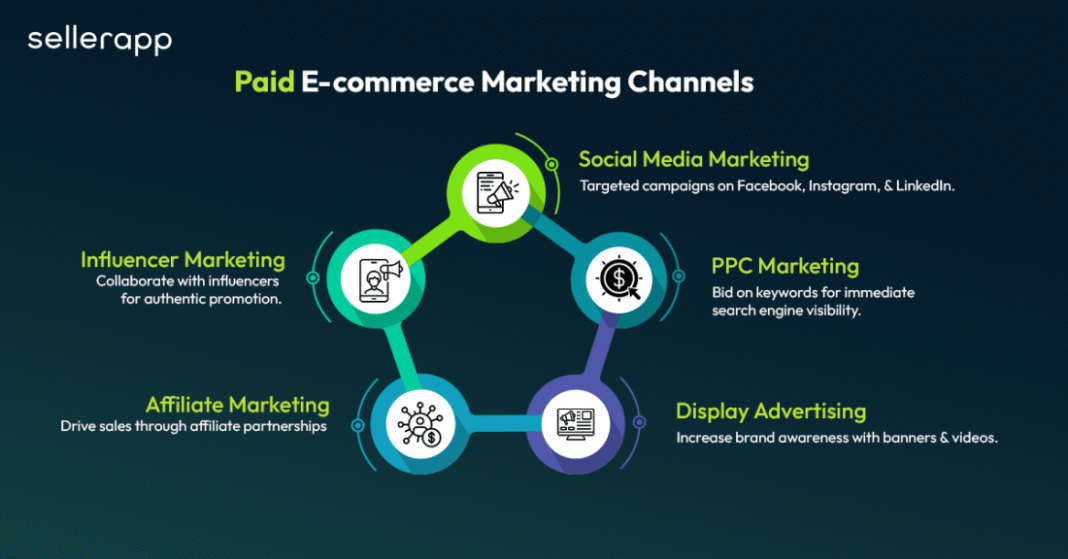
Paid Advertising in Ecommerce
Paid digital advertising accelerates growth and scale.
Common Paid Channels
-
Search ads
-
Social media ads
-
Display and remarketing ads
Paid campaigns allow ecommerce brands to target specific audiences, control budgets, and test messaging quickly.
Content Marketing for Ecommerce
Content marketing builds trust and supports conversion.
Content Types
-
Buying guides
-
Product comparisons
-
Educational articles
-
Videos and visual content
Content helps customers understand value, reduces hesitation, and improves long-term brand authority.
Email Marketing and Customer Retention
Email remains one of the most effective ecommerce channels.
Key Ecommerce Email Uses
-
Welcome sequences
-
Abandoned cart reminders
-
Promotions and launches
-
Post-purchase follow-ups
Email marketing supports repeat purchases and customer lifetime value.
Ecommerce Marketing Automation
Automation improves efficiency and consistency.
Common Automation Areas
-
Email workflows
-
Audience segmentation
-
Personalised recommendations
-
Behaviour-based targeting
Automation allows ecommerce businesses to scale without increasing manual workload.
Data and Analytics in Ecommerce Digital Marketing
Data is central to ecommerce success.
What Ecommerce Brands Measure
-
Traffic sources
-
Conversion rates
-
Cost per acquisition
-
Average order value
-
Customer lifetime value
Analytics guide decisions on budget allocation, channel performance, and growth opportunities.
Ecommerce Customer Journey and Funnel
Digital marketing aligns with each stage of the ecommerce funnel.
Awareness
-
Social media content
-
Paid reach
-
Influencer exposure
Consideration
-
Reviews and comparisons
-
Product pages
-
Retargeting campaigns
Conversion
-
Optimised checkout
-
Promotions and incentives
-
Trust signals
Retention
-
Email campaigns
-
Loyalty programmes
-
Personalised offers
Understanding this journey improves both marketing efficiency and customer experience.
Ecommerce Platforms and Digital Marketing Integration
Ecommerce platforms are designed to integrate with digital marketing tools.
Many businesses build their stores on platforms such as Shopify, which support analytics, advertising integrations, and automation tools commonly used in the US and UK.
Platform choice affects marketing flexibility, data access, and scalability.
Ecommerce Digital Marketing for Small Businesses
Small ecommerce businesses benefit greatly from digital marketing.
Advantages for Small Brands
-
Targeted advertising with limited budgets
-
Direct customer communication
-
Ability to compete with larger brands through niche focus
Smart channel selection and clear positioning are critical for smaller operations.
Ecommerce Digital Marketing for Large Brands
Larger ecommerce brands focus on scale and optimisation.
Key Priorities
-
Multi-channel coordination
-
Advanced analytics
-
Brand consistency
-
International market adaptation
Digital marketing teams often operate across multiple regions and customer segments.
Common Challenges in Ecommerce Digital Marketing
Despite its advantages, challenges exist.
Typical Challenges
-
High competition and rising ad costs
-
Customer acquisition vs retention balance
-
Platform and algorithm changes
-
Data privacy and regulation
Managing these challenges requires ongoing testing and adaptation.
Compliance and Consumer Trust
Trust is critical in ecommerce.
Important Considerations
-
Transparent pricing and policies
-
Data protection and privacy
-
Honest product representation
-
Clear communication
In the US and UK, consumer protection and data regulations strongly influence ecommerce marketing practices.
Skills Required for Ecommerce Digital Marketing
Professionals working in ecommerce marketing need a blend of skills.
Key Skill Areas
-
Marketing strategy
-
Data analysis
-
Platform knowledge
-
Creative content development
-
Performance optimisation
Ecommerce marketers must understand both marketing and business operations.
Career Opportunities in Ecommerce Digital Marketing
Ecommerce growth has created strong demand for skilled professionals.
Common Roles
-
Ecommerce marketing manager
-
Performance marketing specialist
-
CRM and retention manager
-
Content and social media strategist
-
Ecommerce analyst
These roles are widely available across the US and UK job markets.
Future Trends in Ecommerce Digital Marketing
Ecommerce marketing continues to evolve.
Emerging Trends
-
Personalisation driven by data
-
Short-form video and social commerce
-
Increased automation
-
Greater focus on customer experience
-
Stricter privacy expectations
Brands that adapt early gain competitive advantage.
Final Thoughts on Ecommerce Marketing Digital
Ecommerce marketing digital is the engine that drives visibility, growth, and profitability for online businesses. It combines strategy, creativity, technology, and data to connect products with customers in measurable and scalable ways.
For ecommerce brands in the US and UK, success depends on understanding the customer journey, selecting the right channels, using data intelligently, and continuously adapting to change. When executed effectively, digital marketing enables ecommerce businesses of all sizes to compete, grow, and build lasting customer relationships in an increasingly competitive global marketplace.